
[ Car Hacking — Guides & Tutorials ]
Long-form material for the car-hacking section. Two flavours:

  Tutorials      hands-on walkthroughs where you DO something
                 (set up a virtual CAN lab, sniff UDS traffic from a
                 known-good scan tool, etc.). Run-along format.

  Reference Guides  read-once material that explains a protocol,
                 a module, or an architectural pattern. Look-up format.

For the scripts these guides are built around, the hardware reference,
and the curated link list, see the Car Hacking parent page.
[ Tutorials ]
CAN bus — a generic introduction 05.18.2026
Vendor-neutral primer on the CAN protocol -- physical layer
(differential 2-wire signalling, CAN-H / CAN-L voltages, terminator
placement), multi-master arbitration (lossless bit-by-bit collision
resolution, lower-ID-wins priority), frame anatomy (11-bit vs
29-bit IDs, SOF / DLC / DATA / CRC / ACK fields, the 8-byte payload
ceiling that motivates ISO-TP), bitrates and variants (classical
CAN at 125 / 250 / 500 kbps, CAN-FD, CAN XL), what rides on top
(ISO-TP transport layer, UDS diagnostic services, OBD-II, SAE
J1939 for heavy trucks, CANopen for industrial automation),
tooling (SocketCAN, can-utils, python-can, SavvyCAN, hardware
adapter shortlist), and safety practice (listen-only first,
integrity-protected IDs with rolling counters + CRC, brick-recovery
realities).

Designed as the prerequisite for the JEEP-specific primer and the rest
of the applied material on the parent page. Read this first if you've
heard of CAN but never touched one; skip if you already know the
difference between SF / FF / CF / FC framing.
Turn a cheap ESP32-S3 and an MCP2515 module into a pocket CAN sniffer
with ESP32 Bit-Pirate firmware — no laptop tethered to a SocketCAN
adapter. Walks the whole loop: wiring the MCP2515 (SPI to the board,
CANH/CANL to the bus, the 3.3 V/5 V level gotcha, termination), setting
the bitrate for the bus you're on (500 kbps OBD-II, 125 kbps JEEP
CAN-IHS), and running sniff to capture frames to the device's flash.

Then off the device and into SavvyCAN: pull the log over Wi-Fi with
bp_fetch.py, convert it to a GVRET CSV with bitpirate_to_savvycan.py
(optional DBC decode), then filter, decode, and graph. Includes the
synthetic-timing caveat — Bit-Pirate emits no per-frame timestamps — and
the passive-sniff-vs-active-send safety line.
Hands-on primer for new CAN-bus hackers working on the JEEP platform. Covers proven Waveshare 2-channel CAN HATconfig.txtparameters andip link / ifconfiginitialization, the can0-vs-can1 naming gotcha, terminating resistors (you don't need to add any), CAN-C vs CAN-IHS payload-size discrimination on duplicate IDs ($12Bis 1-byte on IHS, 8-byte on C), sleep / wake behavior (including the$2D3empty-bitmap wake fallback that several on-site scripts use), what to expect from time-driven vs event-driven messages, partially-offline sensor sentinels, and a worked hexadecimal-to-decimalprintfpattern that all the bash scripts use. The TTCAN section is what makes this primer specifically JEEP-shaped: the Wrangler's CAN-C and CAN-IHS aren't ordinary CAN but a time- triggered variant where most slots are pre-reserved for specific message IDs. Includes a textual matrix-cycle rendering and a pointer at the Leen & Heffernan 2002 paper that originally formalised the scheduling model. The$400TTCAN controller ID is flagged for further discovery work. Closes with safety: airbag-deployment likelihood (low but not zero, treatments to make it lower), short-circuit consequences (engine code + a stern look from the dash, not permanent damage absent cut wires), and the always-relevant "don't fuzz random IDs at your own car" advisory. Originally written by jmccorm; page polish and cross-links by magikh0e.
Python Canbus Lab Guide 05.2026
Hands-on lab for learning CAN bus reverse-engineering WITHOUT a real
vehicle. Install py-can + can-utils, bring up a pair of virtual CAN
interfaces (vcan0 / vcan1 to mirror CAN-IHS / CAN-C), replay a captured
drive log via canplayer, and watch the traffic in tkcan.py or the newer
pyJeepCan.py curses dashboard. Includes candump format walkthrough, a worked
$12B decode example, a verifiable "what you should observe" checklist,
cross-links to the Bus & Message Reference for ID lookups, and teardown
commands.

Download: tkcan.py (Tk viewer) |
pyJeepCan.py (curses viewer) |
CANBus Log Files
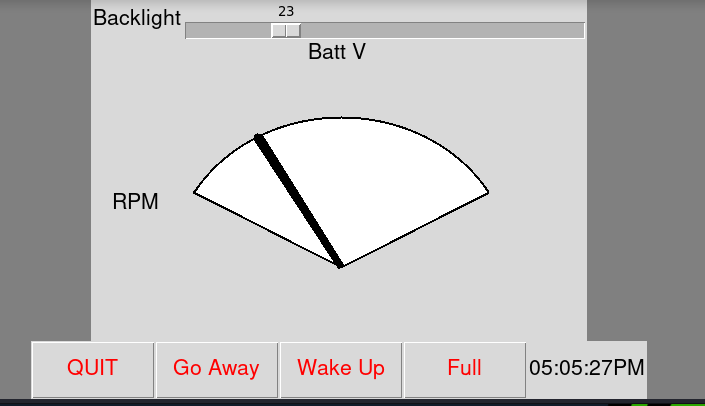
Hands-on intro to UDS reverse-engineering, using JScan as a known-good stimulus tool. Connect JScan, click a Live-Data field or an Activation, sniff what JScan sends withisotpdumpandcandump, decode the protocol byte-by-byte. The walkthrough covers Service 0x22 (ReadDataByIdentifier — reading battery voltage via DID $D020 on the HVAC module's $783/$503 ID pair) and Service 0x2F (IOControlByIdentifier — honking the horn via DID $D0AD on the BCM's $620/$504 pair). Also walks through the "request_service + 0x40 = positive response" rule and the 0x7F negative-response form, both of which carry across every other UDS service. Includes pointers to the Bus & Message Reference, horn.sh, and 3rd_brakelight.sh as natural follow-ons. Original walkthrough by jmccorm; page polish by magikh0e. Same technique applies to any UDS-speaking diagnostic tool (wiTECH, Autel, Launch X431, Topdon) — JScan is just the example.
[ Reference Guides ]
FCA CAN Bus & Message Reference 05.2026
CAN-C vs CAN-IHS topology, TIPM/TIPMCGW gateway behavior, and decoded
message IDs with byte-level evidence lifted from the scripts above —
$1C0 RKE payloads, $122 ignition state, $25D radio mute, $291 lights /
turn signals, $328 EVIC text, $350 RTC layout, $2D3 NM wake and the UDS
service path used by 3rd_brakelight.sh ($620 / DID $D1B3), plus the
full JEEP live-data message map extracted from pyJeepCan.py. Worked
Service 0x2F (write) and Service 0x22 (read) examples for direct module
interaction. Includes candidate IDs for unverified next-additions (fuel
level, throttle, TPMS, ambient temp, sway-bar / locker requests on JL
Wrangler) and caveats on model/year variance.
Read-side counterpart to UDS Write Operations below. Covers Service 0x22
ReadDataByIdentifier — the on-wire protocol, positive / negative
response codes, the FCA module catalog (BCM / SCCM / Radio / IPCM / HVAC
arbitration-ID pairs and which CAN bus each sits on), DID discovery
patterns (ISO-standardised F1xx identification range, observed
manufacturer-specific clustering, scan-tool capture as a discovery
shortcut), ISO-TP framing for multi-frame responses (VIN spans three CAN
frames), and the SGW pass-through rules that explain why 0x22 reads work
from the OBD-II port without AutoAuth on 2018+ FCA vehicles while 0x2F /
0x2E / 0x31 writes don't. Includes the rid.sh / ridscan.sh /
read_vin_uds.py scripts that implement the pattern.
The shared pattern behind every actuator-control script on the parent
page (3rd_brakelight, horn / 3honk, 2k). Covers UDS Services 0x2F
(IOControl), 0x2E (WriteDataByIdentifier), 0x31 (RoutineControl), and
0x27 (SecurityAccess); the two cleanup patterns (toggle-and-release vs
hold-via-TesterPresent); known writable targets with verified DIDs and
routine IDs; SGW interaction (what passes through the OBD-II port vs
what requires direct CAN access); and the safety discipline that
separates a useful demo from a bricked module.
Reference guide to the FCA / Stellantis Secure Gateway Module on 2018+
vehicles — what it is, why it sits between the OBD-II port and the rest
of the CAN bus, what it gates (writes blocked, reads allowed), how
AutoAuth authentication works, hardware bypass options and their
trade-offs, and how the SGW relates to the Uconnect head unit. Written
from the perspective of someone working on these cars rather than
someone selling a $5,000 scan tool.
In-Vehicle Event Handlers 05.2026
The shared architectural pattern behind every state-change automation
script on the parent page (Blackbox_monitor, autocollect, Remote_WiFi,
backlight). Covers the candump + state-machine loop structure, edge vs
level triggering, three rate-limiting strategies, three cleanup
disciplines (explicit reset, deliberate non-reset, restore-to-safe),
hardware lifecycle integration (crank brown-out, vehicle sleep, SD card
flush), bus-quiet reconnect handling, and a worked example for adding
your own handler for a new message ID.
Bridge between raw candump sniffing and UDS diagnostics work. Covers the
CAN vs ISO-TP mental model, ISO-TP frame types (SF / FF / CF / FC) with byte
layouts, isotpdump invocation and argument walkthrough, how to discover
tester/ECU ID pairs on a target platform, and a worked Single Frame example
matching the 3rd_brakelight.sh UDS request.